
“A film preserved but never seen is, at best, an institutional achievement and at worst, a monument to institutional indifference.”
A sentence captured from Ankit Vaishnav and Mahesh Kumar Meena’s presentation, “From Vault to Screen: Film Heritage, Digitization, and Accessibility at NFAI”
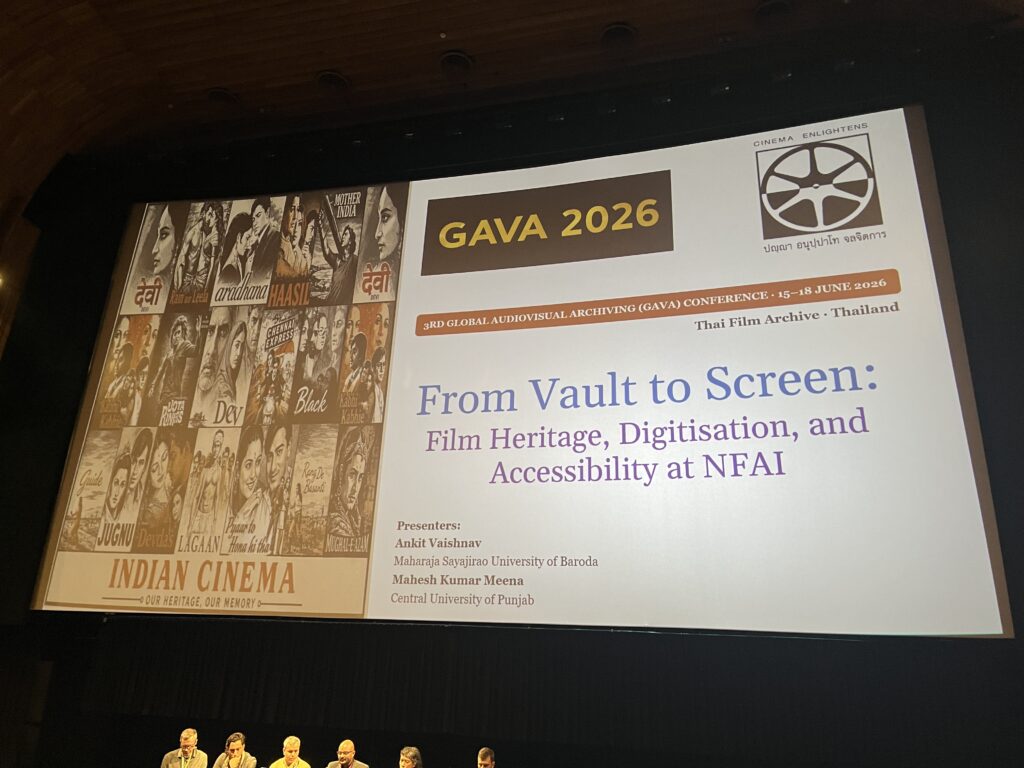
Having over 22 official languages, hundreds of dialects, and numerous regional film industries, India produced over 2000 films annually. Although Bollywood remains the dominant one, it represents only one part of India’s vast cinematic landscape.
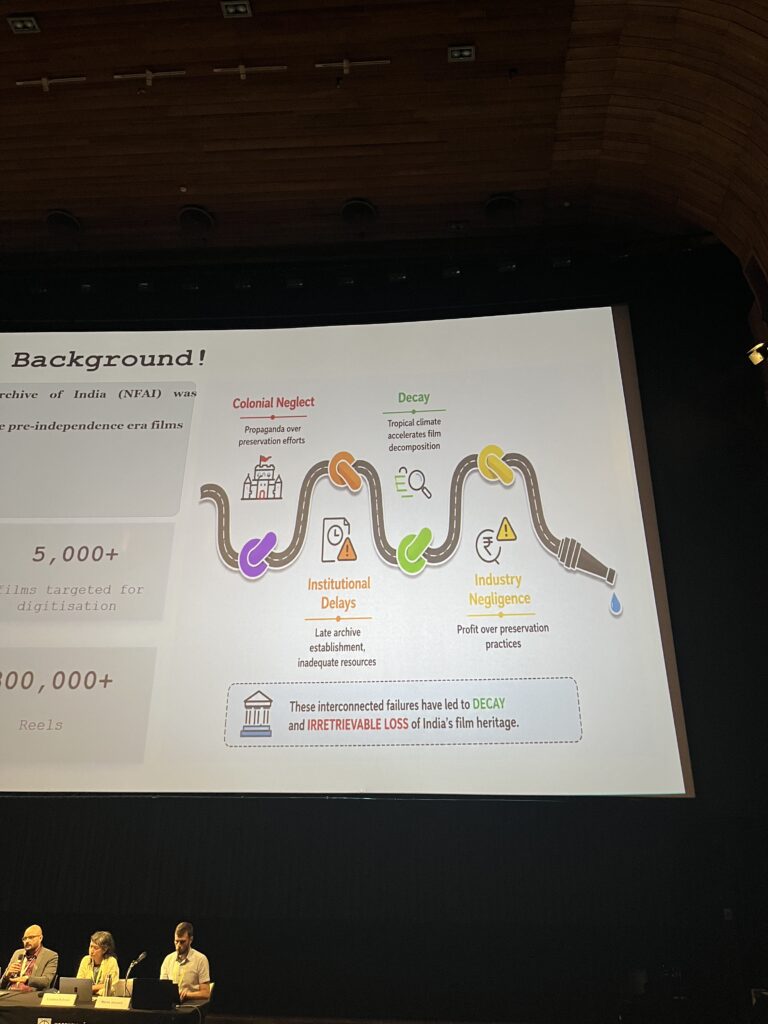
However, despite the massive amount of films that were produced, the acknowledgement and effort of preservation were not in place at the same time.
Film production started in the 1920s, but the archive was not introduced until 1964, after India was independent from British colonial rule. In the very beginning, it was underfunded, unaware, and profit-oriented. Without government support, coupled with neglect of preservation by the upper film industry producers, and unfavorable storage in a tropical environment, massive Indian films were lost. Despite limited resources and India’s history of film loss, NFAI achieves remarkable preservation. However, in terms of public access, the collection remains disorganised and limited.
To shape the access situation in India’s heritage in the digital era and the challenges obstructing that access, the speakers conducted qualitative interviews with archivists, restorers, and filmmakers at NFAI and performed a policy analysis by observing digitization initiatives in various states, on OTT platforms, and in independent archives. Through speakers’ findings, show that strict protocols, inadequate infrastructure, and a preservation-first mentality hinder physical access. On the other hand, remote access faces copyright law restrictions, low discoverability caused by poor metadata and English catalogues, as well as subscription costs and internet inequality across regions.
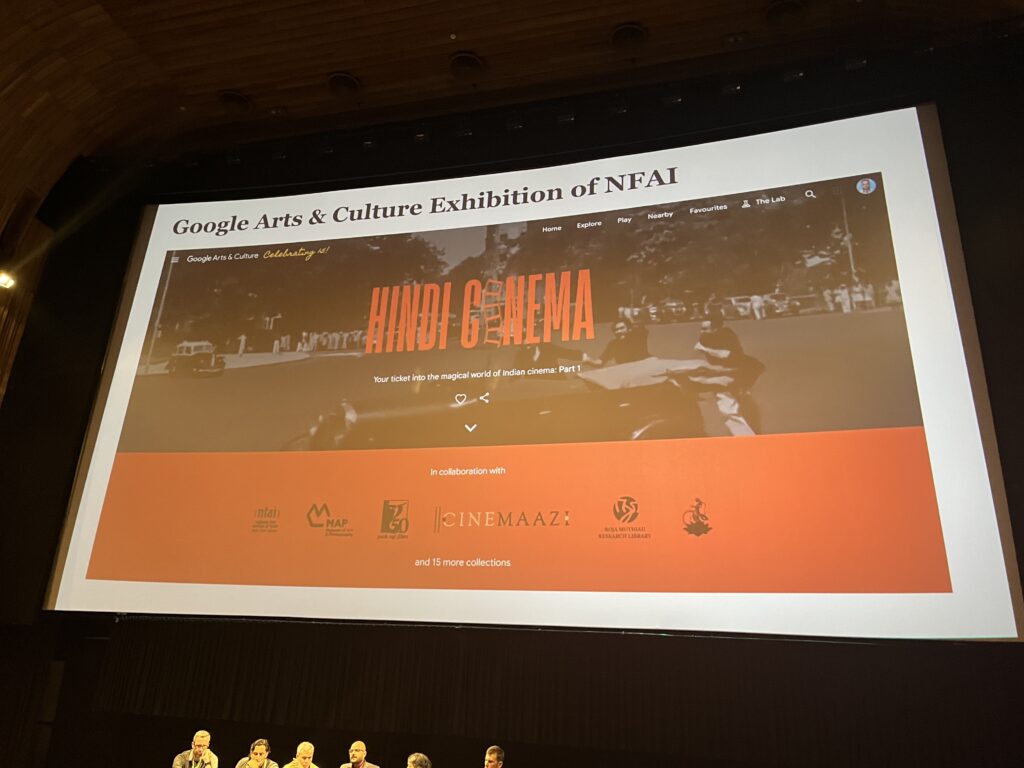
These challenges are reflected in the current state of the access situation in India’s digital age. To expand public access to Indian films, while digitized works from NFAI collections can be found on platforms such as Netflix, Amazon Prime, ZEE5, SonyLIV, and Eros Now, these platforms primarily focus on content with commercial value. In addition, another initiative is the online exhibition “Hindi Cinema” on the Google Arts & Culture platform, a project jointly organized by six Indian institutions, including NFAI, that aims to contextualize and introduce some of the key figures and significant periods in the history of Hindi cinema. Generally speaking, although NFAI’s effort in giving public access to their collections can be observed, the information about their collections remains fragmentary and commercial-oriented.
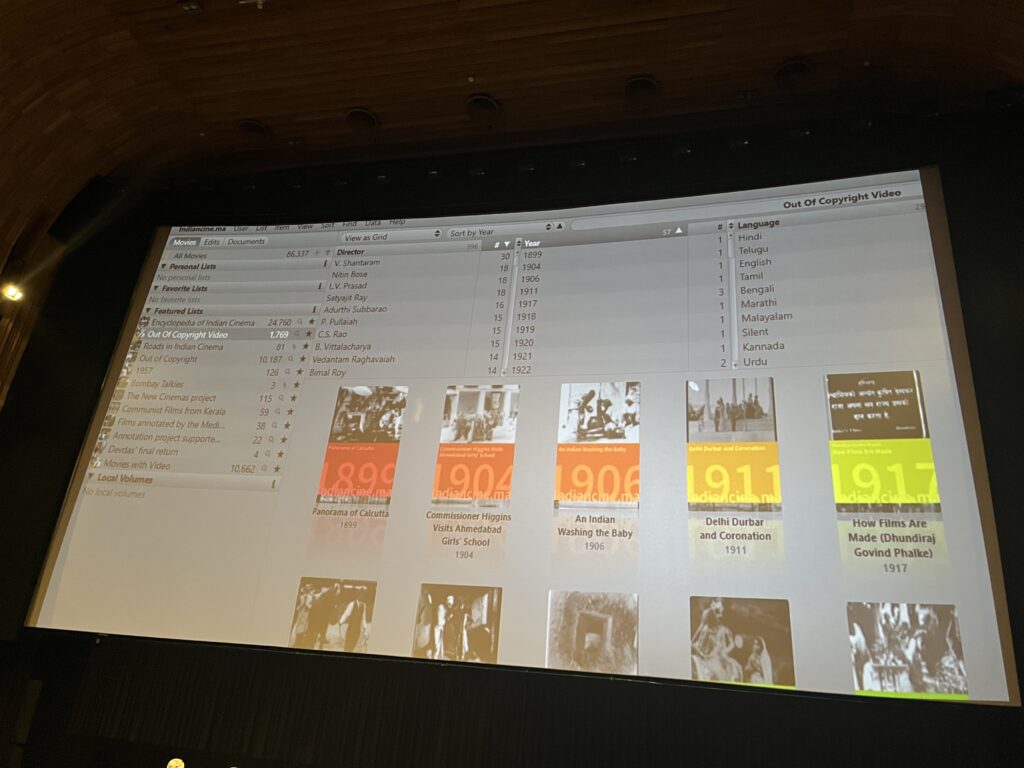
On the flip side of corporate projects, independent and community-based archives are also making efforts to fill institutional gaps, such as two comprehensive annotation digital platforms, Indiancine.ma and Pad.ma. Two of these platforms pursue completely different focuses: the former is an annotated online archive of Indian film, whereas the latter is an online archive of densely text-annotated video material, primarily footage and not finished films. Both were initiated by Pad.ma.
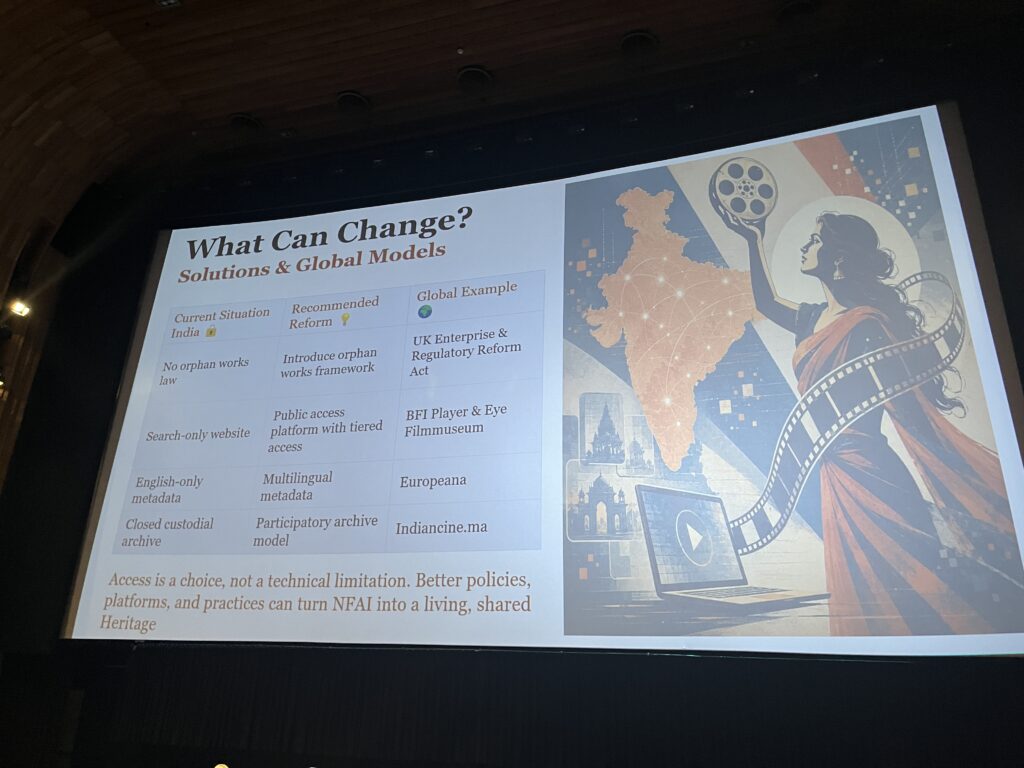
“Access is a choice, not a technical limitation. Better policies, platforms, and practices can turn NFAI into a living, shared heritage.”
Near the end of the speaker’s presentation, they proposed four solutions for the current state:
- Introduce the orphan works framework into the law,
- establish a public-access platform with tiered access,
- adopt multilingual metadata rather than English-dominated metadata, and
- a participatory archive model instead of a closed, custodial archive.
The presentation also lists existing models from organizations around the world that are tailored to these proposed solutions.
As someone who has been fortunate enough to study abroad but lacks institutional power in my home country, I deeply resonate with the speakers’ proposal, and at the same time, I struggle with how to share and apply the good practices I’ve learned overseas to my hometown community.
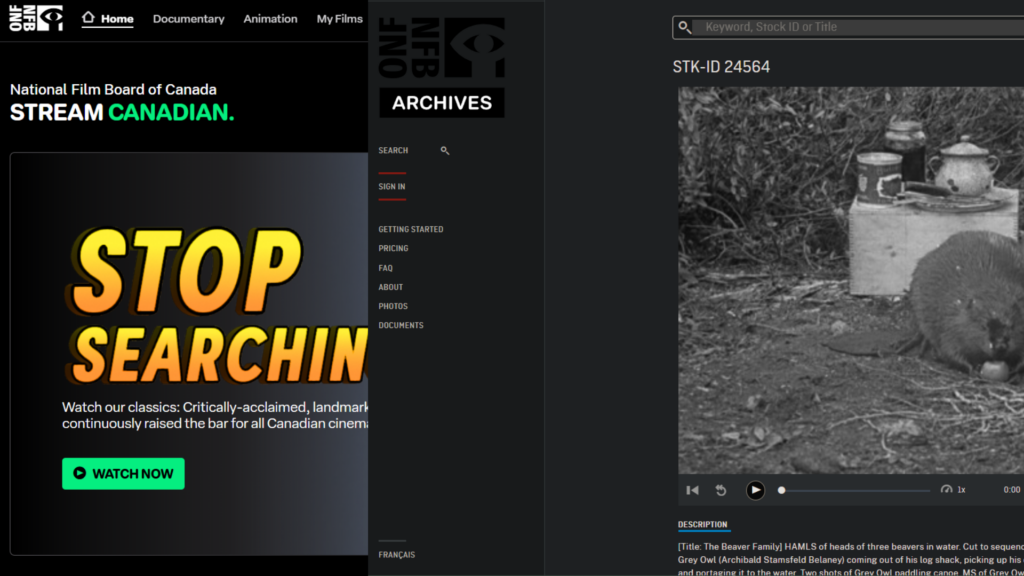
In terms of access to resources, Canada is perhaps one of the most democratic examples I have seen to date. Anyone, not just Canadian citizens, can freely watch a wide range of works, from restored films to contemporary movies, on online streaming platforms through the National Film Board (NFB), an institution that likely houses the majority of Canada’s film archive. Its archival materials can also be browsed through the online NFB Archives, with the archives’ descriptions and muted video previews provided.
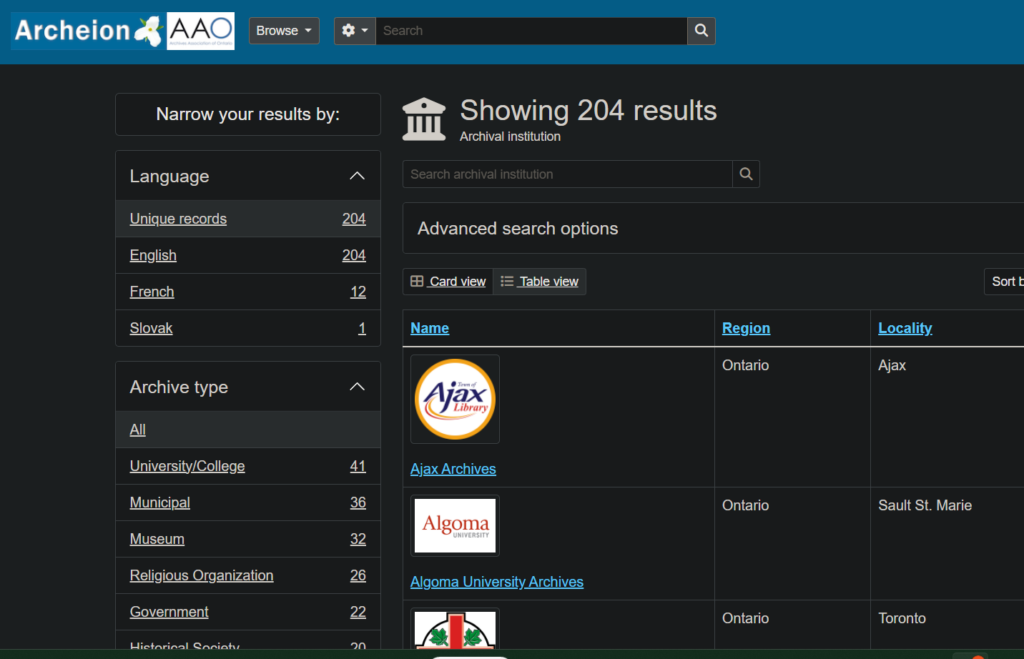
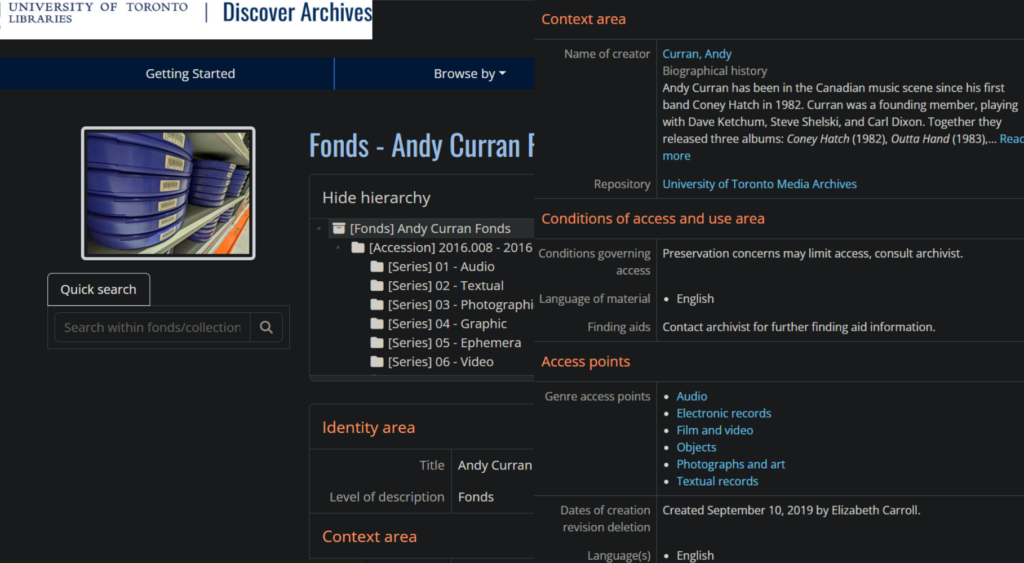
Given Canada’s vast territory, provincial archival associations, such as the Archives Association of Ontario, serve as a gateway to exploring institutions’ collections across provinces, including archives, libraries, art galleries, universities, and museums. They utilize Access to Memory (AtoM), a web-based open-source application, as institutions’ primary tool to share information, granting users a bird’s-eye view of what each institution acquired. Collections are given thorough archival descriptions and are available publicly. Additionally, to learn more detailed item-level information, users can also request finding aids from individual institutions.
Proposing an alternative approach is by no means intended to disparage someone else’s method. Instead, it’s an invitation to collectively rethink how we might shape the field of archiving in different ways. What kind of infrastructure supports their level of democracy? And how can we adapt that infrastructure to fit our model?
“Digital access does not automatically create equality. Existing social inequalities are reproduced within digital systems.”
Near the end of the speakers’ presentation, they broadened the scope of discussion from digital access to democratic access. With their observation of the internet inequality issue and an English-dominant catalogue in India, they stated that structural inequalities persist even with digital access to the collections. The speakers’ compassionate observation struck me that characterizing institutions’ current access policy as an “issue” is by no means intended as a criticism; rather, it is meant to advocate for broadening the scope of stakeholders’ attention and concern to include invisible groups and their needs.
Having grown up in Taipei, Taiwan, I am well aware of what a rare opportunity it is to have access to the educational resources this capital city offers. I also understand that research resources, particularly in the field of film studies, have always been concentrated here and have primarily been an opportunity reserved for a specific social class. While establishing digital access infrastructure for the general public may not automatically resolve the inequality in our society, it’s a minor step toward that by adopting the mindset of decentralizing our resources and making film studies accessible beyond a select few.
Presenters Info:
Ankit Vaishnav is a researcher in moving image archiving, focusing on digital preservation, cultural memory, and India’s film heritage. He blends academic research with hands-on media experience, publishing on topics from film restoration to meme culture. His work bridges media history, digital transformation, and sustainable archiving for South Asian cinema.
Mahesh Kumar Meena is an academic researcher with a PhD on visual effects in Hindi cinema, whose work spans film studies, digital cinema, and visual culture. With experience in the film industry and archival projects, their research explores media technologies, digital storytelling, and the societal impact of digital media in contemporary India.